

Introduction
It’s 2025. Violence against women is still un indescribable huge problem. It even seems to be increasing ever more. In the current political, (extreme) right climate women’s rights are under pressure worldwide.
The numbers
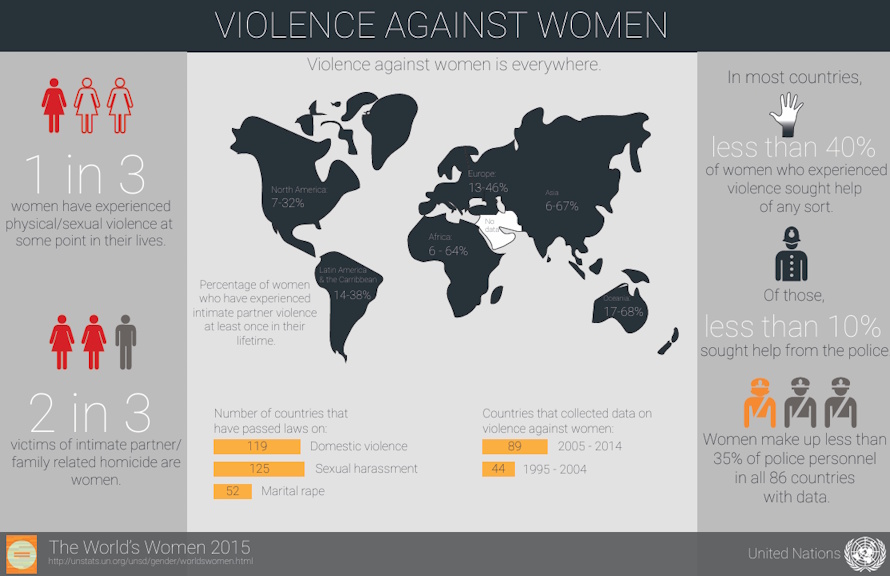
No less than 35% (!) of women worldwide experience physical and/or sexual violence; to be clear, that’s over 750 million women. Many countries still have not implemented laws against domestic violence and sexual harassment. A mere 52 countries have implemented laws against marital rape. The vast majority of women who have fallen victim to these kinds of abuse never seek help, 1 in 10 women actually files charges.
All over the world, 180 women die by gender related violence every day, that’s 7 women every hour.
Globally, women’s rights are under pressure. For example, in 2021 Turkey withdrew from the Istanbul Convention, better known as Council of Europe Convention on preventing and combating violence against women and domestic violence. A telling gesture in the country that’s plagued by femicide (every day a woman dies of gender related violence). Unfortunately, this example isn’t an isolated incident. The US sees women’s right, including the right to abortion, being overturned. In Europe circumstances deteriorate as well. The (extreme)right, populist climate brings about a conservative landslide of terrifying proportions. Next to the disgusting immigrant discussion, laws are quietly being implemented that are not helpful for women.
The Netherlands
I am a Dutch citizen. The numbers in The Netherlands are far much better, right? Far from it. The trigger for this piece is the number of horrific murders lately, all of them with female victims. And, the convictions many young males embrace, which degrade women to possessions, commits women to comply to all kinds of rules and implementing policing and control those rules as a priority, are worrisome, to say the least. The impact of male “role models” and/or influencers on social media is huge and effectively leads to an increase of conservative beliefs, like the tradwife-movement. What’s even worse is that some young females effortlessly comply and at times willingly participate.
In the 1960s the Netherlands experienced a breath of fresh (political) air. The Dolle Mina’s, Wij Vrouwen Eisen, Baas In Eigen Buik, Man Vrouw Maatschappij: they all fought for equality in the workplace, the end of the double sexual morale, freedom and safety. It’s telling that the Dolle Mina’s are back, since January 2025 to be exact. It’s a sad conclusion to realize it’s necessary. Recently, Eurostat published the next stats on The Netherlands:
- 41% of all women experienced physical and/or sexual violence at some point in their lives. For 7%, the violence was structural
- 1 in 3 women has experienced sexual violence in her life
- Almost 1 in 6 women in the Netherlands has experienced physical and/or sexual violence by an (ex-)partner
- 1 in 3 women has experienced psychological violence by an (ex-)partner
- 1 in 14 women has been raped by a non-partner since the age of 15
- Over 40% of women have experienced sexual harassment at work in their lifetime
In The Netherlands, every eight days a woman dies of gender related violence.
Downright shocking numbers, that don’t fit with the societal developments I was raised with. The fact that women’s right are an issue at all is depressing enough. The fact they’re under pressure is unbearable.
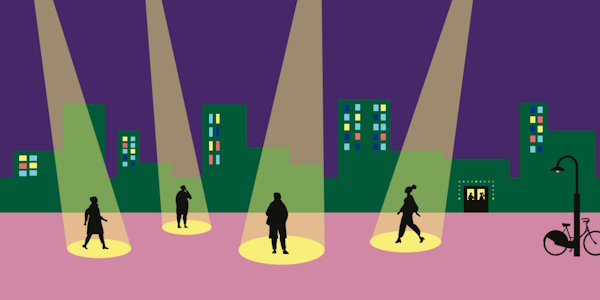
The recent events in The Netherlands reignited the discussion on safety, and particularly the lack thereof when women go out, meet in a bar, go to the park, visit festivals and use public transportation facilities. Oftentimes women travel together and keep each other informed about their comings and goings. But just plain walking down the street is enough for some men to shout, whistle or chase. Out of all the young women in The Netherlands, 3 out of 4 have experienced street harassment, while numbers are considerably lower with young men (1 out of 3).
I am truly shocked when I read these statistics, Some men, from every background and social standing, and from every generation evidently feel that this kind of behaviour is completely acceptbale. Where did this all go so horribly wrong? In part it can be attributed to the conservative wave raging all over the world, the rise of religion, re-introducing the backwardness of archaic convictions about the division of roles between men and women. Extreme ideas obviously don’t contribute anything, neither do the so-called role-models, but that doesn’t account for everything. The fact that women don’t feel safe enough to just be themselves is a problem, one that The Netherlands should be deeply, very deeply, ashamed of.
What to do?
Human rights are violated, discrimination of women is commonplace. What I understand from reading the many analyses, is that the solution isn’t easy, but not impossible. It all starts with education, breaking down the current male/female balance of power, banishing stereotypical ideas about masculinity and femininity and reinforcing the (economic) position of women.
Registering helps
The website of the Netherlands Institute for Human Rights states that registering helps:
Registering helps to receive help yourself, and to prevent others to experience the same. The Netherlands offers several contact points for various types of violence against women and girls. See the link below.
Go to: geweldtegenvrouwenmelden.nl.

