
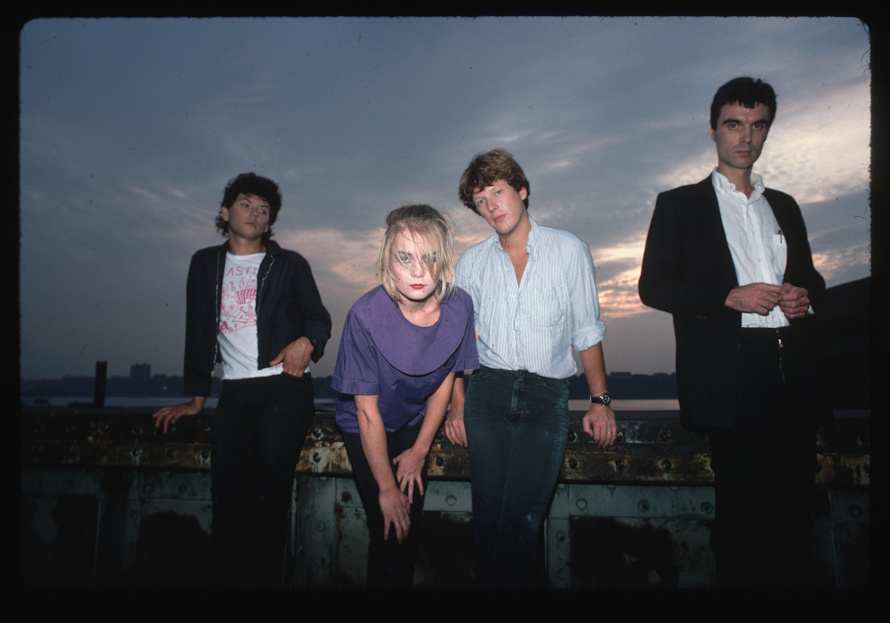
Talking Heads 1980 (fltr: Jerry Harrison, Tina Weymouth, Chris Frantz, David Byrne)
Introduction
Remain In Light isn’t only regarded as the best Talking Heads album, it’s widely recognized as one of the best albums of all time. A tribute to an album that’s also part of my personal favorites.
Talking Heads
In 1978 I bought the Talking Heads debut album: 77, one of my favorite albums. I didn’t lose sight of the band, but didn’t buy any additional albums. I was still young and didn’t have enough money to buy everything I liked. But the band stayed on my radar. When the single Once In A Lifetime was released in January 1981 I was perplexed! The single made Talking Heads a (financial) priority again. What had the band been up to since 77?
One of the major changes was meeting Brian Eno, who had released the song King’s Lead Hat on his 1977 album Before And After Science. “King’s Lead Hat” is an anagram of “Talking Heads”, so Eno and the band were almost destined to work together. Eno produced albums two and three, 1978’s More Songs About Buildings And Food and 1979’s Fear Of Music. In part due to Eno’s involvement, the band’s music was increasingly influenced by (psychedelic) funk (think Parliament Funkadelic), post-punk and afrobeat (think Fela Kuti).
Talking Heads – Remain In Light
Remain In Light
On October 8, 1980, the fourth Talking Heads album, Remain In Light, was released. It didn’t take long to realize this was an exceptional, innovative, experimental, danceable and highly percussive album. The production is pristine, the music sounds (still does) terrific, it swings and is a sonic attack from every angle imaginable.
Early 1980, the recordings started at the Compass Point Studios in Nassau on the Bahamas, where Talking Heads’ rhythm section (and married couple) Chris Frantz and Tina Weymouth had recently bought a house. Following the short break after the tour for Fear Of Music, the couple felt they had reached a crossroad and seriously contemplated leaving Talking Heads. While on the island they came into contact with Sly Dunbar and Robbie Shakespeare. It inspired the duo and restored their craving for music. Guitarist Jerry Harrison quickly joined the duo, with David Byrne joining them a few days later.
The usual way of working, with David Byrne providing the majority of the music and lyrics, was abandoned. Jam sessions were the way to provide for the music. Upon Brian Eno’s arrival, who was unsure whether or not to record another album with the band, he thought the new music was exciting and decided to stay. The jams delivered danceable, repetitive music, which was increasingly influenced with afrobeat, polyrhythms and even jazz.
…our process led us to something with an affinity to afro-funk, but we got there the long way round, and of course our vision sounded slightly off. We didn’t get it quite right, but in missing; we ended up with something new.
David Byrne in conversation with the Library Of Congress, 2017
The new techniques David Byrne and Brian Eno had already utilized on their joint album My Life In The Bush Of Ghosts, which would be released on February 25, 1981, were also used for the Remain In Light album. The studio provided innovative, state-of-the-art equipment like the Lexicon 224 Digital Reverberator, the Prime Time Model 93 (delay effects), a Voltage Controlled Oscillator and a Roland guitar synthesizer. The studio itself was also used as an instrument.
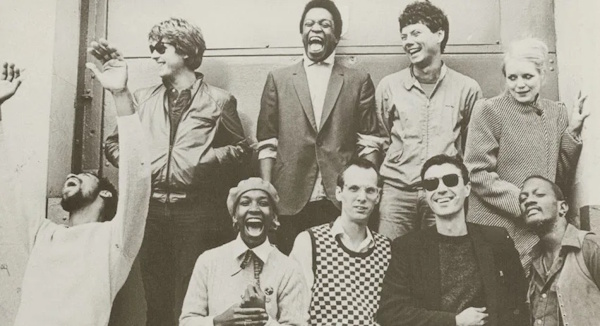
Besides the Talking Heads band members, who each also added a lot of percussion to the recorded music, the guest musicians played a pivotal role as well. Next to Brian Eno, the name Adrian Belew stands out. He had recently contributed to (the latter part of) Bowie’s Berlin trilogy and he brought that influence with him. His guitar eruptions (with and without the Roland guitar synthesizer) add to the album’s experimental and at times alienating character. Robert Palmer, Jon Hassell (trance/ambient jazz trumpet player) and singer Nona Hendryx also brought their expertise.
Talking Heads – Remain In Light – Poster
Music
The end result was hypnotizing. For me, Once In A Lifetime was the introduction to the album, which was a very funky song. But it almost paled to the first side of the album’s vinyl release: Born Under Punches (The Heat Goes On) is a perfect introduction to the album, complete with afrobeat rhythms and guitar licks, combined with Parliament Funkadelic bass playing and the speak/sing Byrne vocals. The experimentation is put to work fairly quickly as well. The mantra like “And the heat goes on, and the heat goes on” is contagious. The next Crosseyed And Painless sounds somewhat more conventional, but is equally compelling and original. The Great Curve is kind of hectic rhythmically, fast and busy.
Side 2 opens with Once In A Lifetime, an unparalleled strong song that’s funky and heavy at the same time. By the end Belew pushed the song to yet another level. Houses In Motion is darker than everything that went before it, but still fits the mood perfectly. Hassell’s horn parts provide the song with its alienating atmosphere. Seen And Not Seen is a combination of reggae and hip-hop rhythms and preludes the moods and structures that was part of the then still to be released My Life In The Bush Of Ghosts album. Listening Wind introduces Eastern and Arabic influences. The closer The Overload is heavy, depressive and massive. According to legend it’s an interpretation of (descriptions of) Joy Division’s music, which was barely available in the US at the time. If it’s true that David Byrne hadn’t heard any Joy Division at the time, it is truly astounding just how much The Overload captures the mood and atmosphere of Joy Division. The song would have been a perfect fit on the second Joy Division album Closer.
Talking Heads – Remain In Light – Ad
Lyrics
The gently ecstatic nature of the tracks meant that angsty personal lyrics like the ones I’d written previously might not be the best match, so I had to find some new lyrical approach. I filled page after page with phrases that matched the melodic lines of the verses and choruses, hoping that some of them might complement the feelings the music generated.
© 2012, David Byrne, How Music Works
Even the vocals are percussive, as everything revolves around rhythm. The lyrics sound more like a “stream of consciousness”, than stories with a beginning, a middle and an end. That doesn’t mean that the foundation isn’t theme influenced. Once In A Lifetime questions the ‘natural’ walk of life. It seems we’re on autopilot when we find ourselves in a marriage, a house, a family and a job at some point and wonder “How did I get here?”
Many songs contain speak-singing, going back and forth with melodic choirs in the background. Oftentimes those choirs aren’t made up of a lot of words and consist of certain phrase being repeated over and over. This also adds to the rhythms of the songs. The choirs can musically be interpreted as a horn section, accentuating the music.
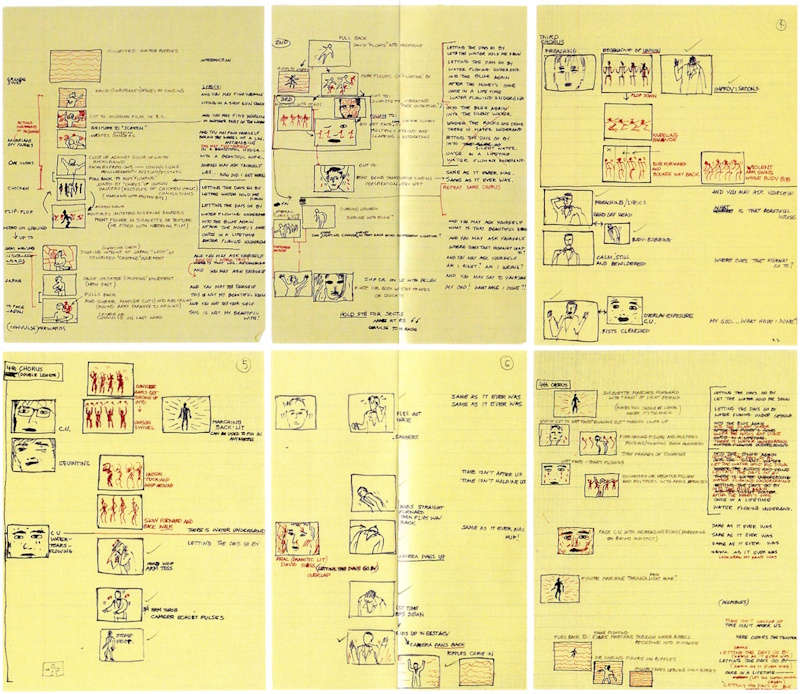
Talking Heads – Once In A Lifetime – Video script
Once In A Lifetime
Once In A Lifetime is the song where everything just blends in perfectly. The musical and lyrical foundation of the album culminates in this song. It introduced me to the album and to the talk-singing and the ‘call-and-response’ that characterizes the album. The funk in the song with the minimalistic bass line, the loose addictive rhythm and the vocals make the song simply irresistible.
I started by taking on the character of a radio preacher I’d heard on one of my cassettes. There was a serious use of anaphora – emphasising the same phrase to begin each sentence… the repetition of the phrase ‘You may find yourself’ for example – were lifted straight from the radio preacher… so the mention of the beautiful house, the beautiful wife, and the trappings of an ideal life would have been a natural segue for me.
© 2012, David Byrne, How Music Works
The song addresses consumerism, automatisms, life on autopilot, doubt and discomfort about the choices made (for someone). The lyric is funny, recognizable and striking.
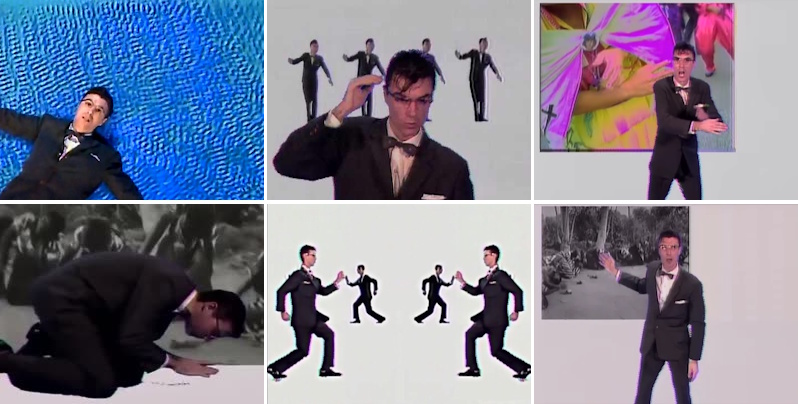
Talking Heads – Once In A Lifetime – Video stills
You may find yourself
Living in a shotgun shack
And you may find yourself
In another part of the world
And you may find yourself
Behind the wheel of a large automobile
And you may find yourself in a beautiful house
With a beautiful wife
And you may ask yourself
“Well … how did I get here?”Letting the days go by
Let the water hold me down
Letting the days go by
Water flowing underground
Into the blue again
After the money’s gone
Once in a lifetime
Water flowing undergroundAnd you may ask yourself
“How do I work this?”
And you may ask yourself
“Where is that large automobile?”
And you may tell yourself
“This is not my beautiful house!”
And you may tell yourself
“This is not my beautiful wife!”Letting the days go by
Let the water hold me down
Letting the days go by
Water flowing underground
Into the blue again
After the money’s gone
Once in a lifetime
Water flowing undergroundSame as it ever was
Same as it ever was…
You may ask yourself
“What is that beautiful house?”
You may ask yourself
“Where does that highway go to?”
And you may ask yourself
“Am I right? Am I wrong?”
And you may say to yourself
“My God! What have I done?!”…
Same as it ever was
Same as it ever was
Same as it, ever was
And look where my hand was
Time isn’t holding up
Time isn’t after us…
© 1980, Talking Heads
It was the first (internationally released) single off the album and wasn’t a hit. In West-Europe Once In A Lifetime only charted in The Netherlands. In the US it turned into a (moderate) hit when the innovative and revolutionary video for the song appeared and started getting frequent airplay on the recently founded MTV. The video introduced the band (and its nerdy image) to a considerably larger audience. Apart from the music, the video is one of the most important and influential videos of all time.
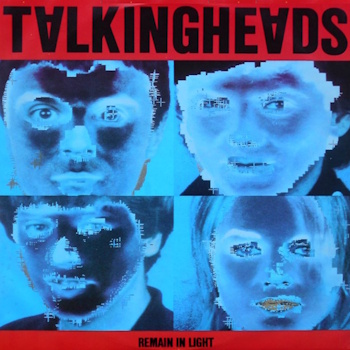
Talking Heads – Remain In Light (inverted)
Album cover
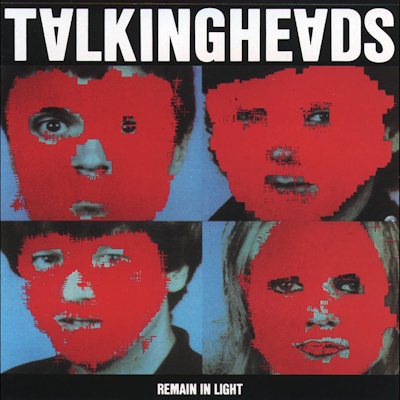
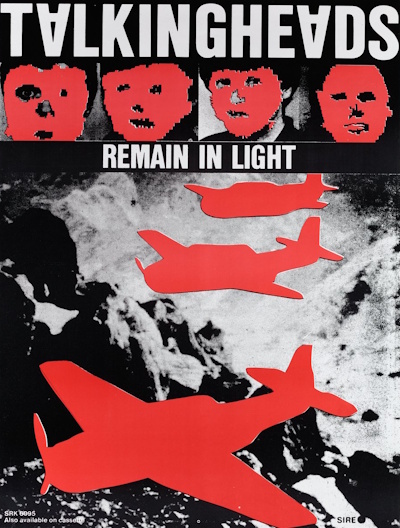
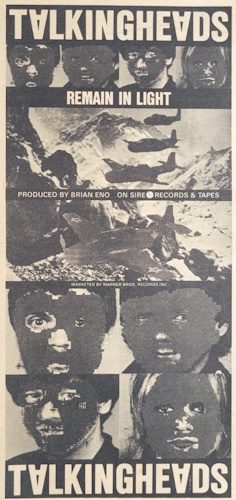
The music was accompanied by an abstract cover, which was innovative in itself. The album was planned to be titled Melody Attack, with a cover already developed: a pop-art like photo if Gruman Avenger torpedo planes flying over the Himalayas. The design was done by Tina Weymouth and Chris Frantz with help from MIT media labs.
The back cover was inspired by Tina Weymouth’s love for masks. The image consisted of four photos of the bandmember’s faces, almost made invisible by red stains. Both the front and back covers were generated using computers, marking one of the first times ever that computer generated images were used on album covers.
However, the album title was changed to Remain In Light, as Melody Attack just wasn’t the right title. David Byrne: “Besides not being all that melodic, the music had something to say that at the time seemed new, transcendent, and maybe even revolutionary, at least for funk rock songs.” The front and back covers to the album were switched, the Talking Heads name was designed with inverted “A”‘s and that was that.
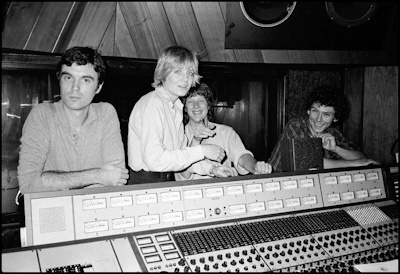
Talking Heads – In the studio
Reception
Remain In Light wasn’t a commercial success, even though it received a gold certification in the UK, US and Canada. The single Once In A Lifetime didn’t fare much better, but was also a modest hit in Australia, Ireland and The Netherlands.
Artistically Remain In Light was a direct hit. There aren’t too many albums that garner the same amount of praise like the one bestowed on Remain In Light, worldwide. The album’s experiment, polyrhythms, innovation, production and blending of several genres is glorified all around the globe. To many there’s a time before and a time after Remain In Light.
The album is a steady part of several ‘best of’ lists, whether the list is geared towards 1980, the 1980s or best albums of all time, Remain In Light can always be found. In 2017 Remain In Light was included in the National Recording Registry by the American Library Of Congress, as it was considered “culturally, historically, or aesthetically significant”.
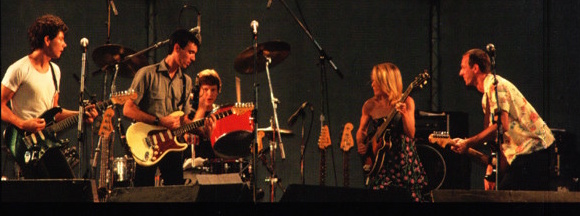
Talking Heads (& Adrian Belew) 1980
Review
The album is part of my favorite albums of all time. Let alone the courage, innovation, production and high level of musicianship, the songs themselves are just beautiful. Once In A Lifetime is one of the best songs of all time and, to this day, still sounds fantastic and current.
The number of genres the album is linked to is nothing short of impressive: new wave, post-punk, worldbeat, dance-rock, art pop, art rock, avant-pop, afrobeat, psychedelic funk and afrofunk. What’s even more mind-blowing is, that all of the above can actually be applied to the total soundscape.

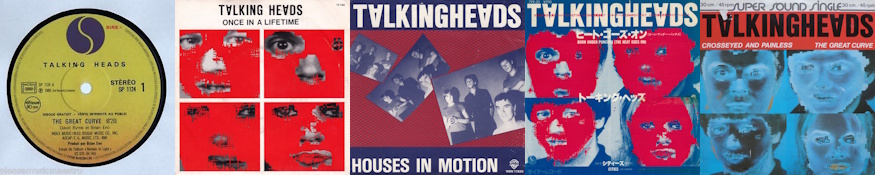
Talking Heads – Remain In Light – Singles
Singles
Two singles were culled from the album, with three extra singles for specific markets.
- The Great Curve
(released in 1980, in France) - Once In A Lifetime
(released in January 1981) - Houses In Motion
(released in May 1981) - Born Under Punches (The Heat Goes On)
(released in August 1981, in Japan) - Crosseyed And Painless
(released in November 1981, in Germany)
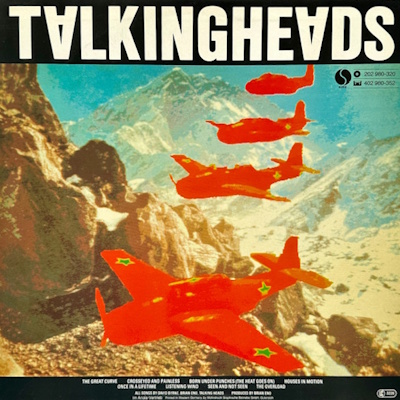
Talking Heads – Remain In Light – Back cover
Songs
All music written by Talking Heads (David Byrne, Chris Frantz, Jerry Harrison, Tina Weymouth) and Brian Eno. All lyrics written by David Byrne, except Born Under Punches (The Heat Goes On) and Crosseyed and Painless written by David Byrne and Brian Eno.
- Born Under Punches (The Heat Goes On)
- Crosseyed And Painless
- The Great Curve
- Once In A Lifetime
- Houses In Motion
- Seen And Not Seen
- Listening Wind
- The Overload
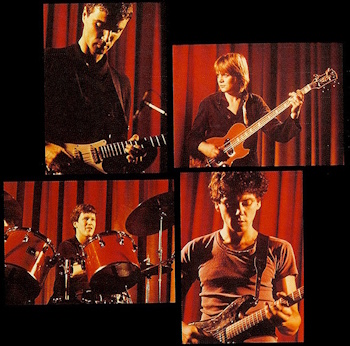
Talking Heads 1980
Musicians
Talking Heads
- David Byrne – vocals, guitar, bass, keyboards, percussion
- Jerry Harrison – keyboards, guitar, percussion, background vocals
- Tina Weymouth – bass, keyboards, percussion, background vocals
- Chris Frantz – drums, percussion, keyboards, background vocals
With help from
- Brian Eno – keyboards, guitar, bass, percussion, background vocals
- Adrian Belew – guitar; Roland guitar synthesizer on Crosseyed And Painless, The Great Curve, Listening Wind, The Overload
- Robert Palmer – percussion
- José Rossy – percussion
- Jon Hassell – trumpet, horns
- Nona Hendryx – background vocals
Talking Heads – Remain In Light – Extended band
After Remain In Light
In order to be able to perform the more complex music and arrangements live while on the Remain In Light tour, the band was extended with top musicians, like guitarist Adrian Belew, keyboard wizard Bernie Worrell, percussionists and singers. The tour was a huge triumph. The Talking Heads audience was growing considerably. It would turn out to be the start of successes yet to come. A rendition of the tour was released on March 24, 1982, on the live (double) album The Name Of This Band Is Talking Heads.
On February 25, 1981, My Life In The Bush Of Ghosts was released, the result of the partnership between Brain Eno and David Byrne, another influential and artistically successful album. In October 1981 Tom Tom Club debuted, the band of Talking Heads’ Chris Frantz and Tina Weymouth, with their eponymous album and garnered some success with hits like Genius Of Love and Wordy Rappinghood. That same month Talking Heads’ Jerry Harrison released his first solo album, The Red And The Black.
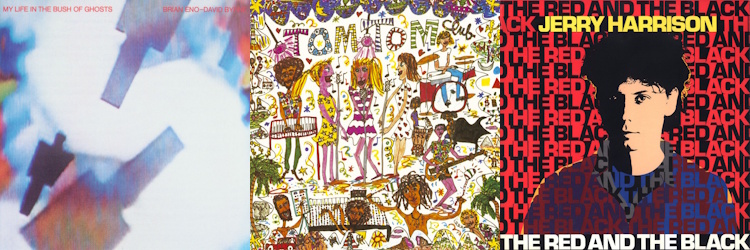
Talking Heads – Solo albums 1981 (Brian Eno-David Byrne – My Life In The Bush Of Ghosts, Tom Tom Club – Tom Tom Club, Jerry Harrison – The Red And The Black)
Following 4 years of nothing less than writing music, recording music, playing live and then doing it all over again, the band took a break. The previously mentioned live album The Name Of This Band Is Talking Heads was released to fill the time between studio albums. Brian Eno and Talking Heads said their goodbye and the band entered the studio for album 5. On June 1, 1983, Speaking In Tongues came to light. Another artistic success, it was also the commercial breakthrough album for the band. A year later Stop Making Sense was released, both a live album and a concert movie, portraying the latest (and final) Talking Heads tour. It was a global phenomenon. Talking Heads had officially reached their commercial zenith.
Next, the albums Little Creatures (1985), True Stories (1986) and Naked (1988) would be released. When in December 1991 the announcement was made that Talking Heads had disbanded, it didn’t come as a surprise.
In closing
What’s your take on Talking Heads and Remain In Light? Let me know!

Video/Spotify
This story contains an accompanying video. Click on the following link to see it: Video: In 1980 Talking Heads release the classic Remain In Light. The A Pop Life playlist on Spotify has been updated as well.

