
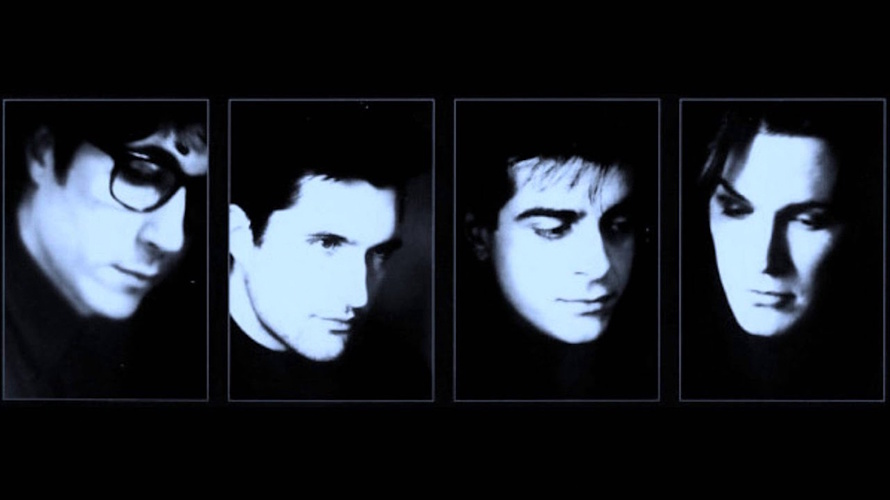
Rain Tree Crow (fltr: Richard Barbieri, Steve Jansen, Mick Karn, David Sylvian)
Introduction
In 1991, following two years of rumors, announcements, and denials, the Rain Tree Crow album was finally released. Was it the long-awaited comeback of Japan, or was it a standalone entity?
Rain Tree Crow
After Japan disbanded at the end of 1982, they only came together once more in early 1983 to refine, supplement, and compile the band’s swan song, the double live album Oil On Canvas. The problems within the band were so significant that no one even dared dream about a reunion.
All the greater was the surprise when, in 1989, the news of an upcoming collaboration between the four original Japan members became a reality.
Yeah, that’s happening next month. Again, it was the idea of being in a position where I could improvise with people. I started thinking about getting a group of musicians together with whom I could improvise, put together a kind of band that I could bring together at certain periods, maybe for live performance or recording. And the more I thought about it, the more I felt, well, there’s a group of musicians there who would understand very well what I would want to do. And so I spoke to them all and everyone was so enthusiastic about it – we thought, “ok, let’s give it a try”.
David Sylvian, August 1989
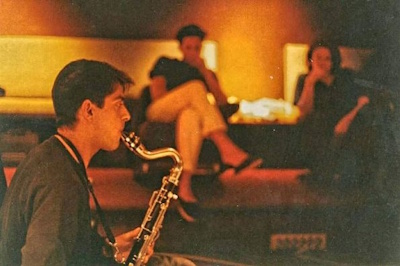
Mick Karn (foreground), Steve Jansen & David Sylvian (background) in the studio (photo by Richard Barbieri)
And the enthusiasm was genuine, not only from David Sylvian, but also from Mick Karn, Steve Jansen, and Richard Barbieri. The record label Virgin also had full confidence in the project. A budget of no less than £250,000 was allocated for recording and stays in various studios. Even after the group adopted the new name Rain Tree Crow and Sylvian insisted that the name ‘Japan’ wasn’t to be used for the album’s promotion.
The money was well spent. The band entered several studios and recorded everything that happened. They went into the studio without pre-discussed plans and/or composed material. The idea was that jam sessions and improvisations would shape the music organically. After the initial recordings were completed, the tapes were reviewed, interesting segments were filtered out, and further developed into songs for the upcoming album.
After the recordings were finished and the album was largely assembled, the budget was exhausted. The band requested more funds, but this was only granted on the condition that the name ‘Japan’ could be used. Sylvian refused. The money was gone and the album still needed to be mixed. Bacause the other band members had prior commitments, Sylvian took on that task. It would take until 1991 before the album finally saw the light of day.
In March 1991, Rain Tree Crow was introduced to the world for the first time with the single Blackwater, for which a video was recorded. The release was a perfect introduction to the album: beautiful, intimate, and tranquil. And, above all, different from where Japan had left off in 1983. It left you wanting more.

Rain Tree Crow – Rain Tree Crow
Rain Tree Crow
On April 8, 1991, Rain Tree Crow’s debut album was released. The album was originally to be titled CAW, but was later changed to Rain Tree Crow. The music bore little resemblance to Japan, instead sounding more like a continuation of David Sylvian‘s solo work. However, on closer listening, the music and the contributions of the other members increasingly fall into place. Mick Karn‘s bass playing may be less prominent than on earlier Japan work, but still sounds unique, organic, and in support of the whole. For Rain Tree Crow, “the whole is greater than the sum of its parts.”
In the June 1991 issue of the music magazine Sound On Sound, Steve Jansen and Richard Barbieri discuss the tracks on the album.
BIG WHEELS IN SHANTY TOWN
Steve: “That was one of the last tracks that we did.”
Richard: “Somewhat of an epic track really.”
Steve: “It was a real jam – Mick playing wah wah bass, Dave was on guitar and I was playing an afro-type-funk thing. We started with a loop of shortwave radio voice and built it up from there.”EVERY COLOUR YOU ARE
Steve: “It was built around a simple song and once we knew everything was there we re-recorded everything separately, so there are no live elements in that one.”
RAIN TREE CROW
Richard: “The structure of Rain Tree Crow was based around a lot of overdubbed flutes played by Mick. Mixed in also was this howling wind sound caused by the vacuum of the studio doors. David sung a very bluesy kind of vocal which reminds me of Billy Holliday.”
RED EARTH
Steve: “This was where we all set up and played percussion. I was playing ceramic drums, Mick was on tabla and Dave was on some Indian drum. We all just jammed and realised we’d got a feel going.”
Richard: “It was all live even though it sounds quite arranged and has a subtle orchestra arrangement built around it.”POCKET FULL OF CHANGE
Richard: “It is quite a basic track, but for me is one of the strongest songs on the album.”
Steve: “It has a very slow groove. Mick and I were plodding along and Dave was holding a note on the Hammond.”BOATS FOR BURNING
Steve: “This was one of the very short pieces, about 45 seconds. It’s just David, guitar and tambourine.”
NEW MOON AT RED DEER WALLOW
Richard: “One of the strangest tracks – there were definitely some original things happening there, like free-form but not jazz.”
Steve: “Originally when we came up with the mood we had all moved between instruments. I was playing bass synth and I think Mick was playing bass clarinet and keyboards, with Dave on guitar. So we were purely playing around with notations and melodies and there wasn’t any rhythm. Then when we realised something was happening we needed some interesting percussion.”
“I’d brought with me a load of ethnic drums, so I built up a percussion track about five or six minutes long. It was all layered and started off with a Moroccan ‘buzz’ drum as a foundation. Then I used some other smaller Indian clay drums which were harmonised for this stereo continuation, and then some Japanese silk fans which if you hit with a pencil close to the microphone you get this wonderful tone. I used two of those so they were like fighting each other.”
“So the percussion track was built up in that way, and what was going on in the original jam was then re-created over the new percussion track.”
BLACKWATER
Steve: “The first single from the album – it features the brush drumming that I mentioned and also has guitar by Bill Nelson.”
A REASSURINGLY DULL SUNDAY
Steve: “That came out of when we were jamming with the Red Earth track and the tape was left running, everyone was playing different instruments that I can’t remember.”
Richard: “I was doing things to the piano that I can’t mention otherwise I’ll get in trouble!”
Steve: “Basically it sounds like children banging things, and there’s this depressing warbling Prophet sound – and that’s it.”BLACKCROW HITS SHOE SHINE CITY
Steve: “That was the first track that we did and was pretty much live and improvised.”
Sound On Sound, Steve Jansen & Richard Barbieri over Rain Tree Crow, June 1991
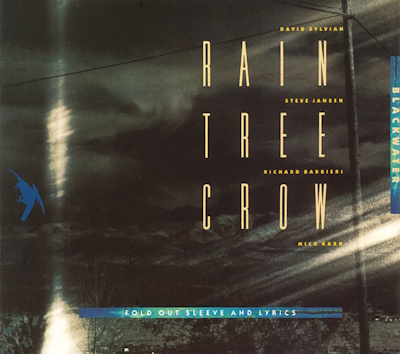
Rain Tree Crow – Blackwater – CD single
Review
I didn’t buy the album right away at the time as I was disappointed. The music didn’t appeal to me yet, and the internal bickering that started fairly quickly completely wore me out. It took almost 8 years before I finally bought it, but by then I was truly ready for it.
These days, I rate Rain Tree Crow more highly. I love the atmosphere, the musicianship, and especially the originality. The music is atmospheric, dreamy, distant yet warm. For me, it’s a headphone album. I miss too many subtleties when I play it through regular speakers.
The richness of Rain Tree Crow may not be for everyone, just as Japan and David Sylvian are not for everyone, but for those who take the time, it is a very welcome addition to any collection!

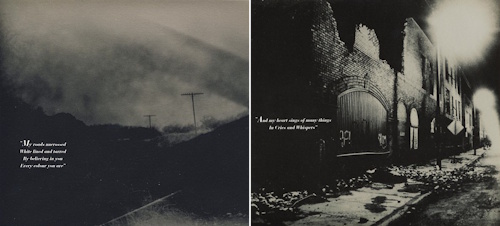
Rain Tree Crow – Rain Tree Crow – Inner sleeve 2003 remaster
Songs
All songs written by Rain Tree Crow.
- Big Wheels In Shanty Town
- Every Colour You Are
- Rain Tree Crow
- Red Earth (As Summertime Ends)
- Pocket Full Of Change
- Boat’s For Burning
- New Moon At Red Deer Wallow
- Blackwater
- A Reassuringly Dull Sunday
- Blackcrow Hits Shoe Shine City
- Scratchings On The Bible Belt
- Cries And Whispers
The 2003 remaster includes the extra track I Drink To Forget, originally released as the B-side of the Blackwater single.
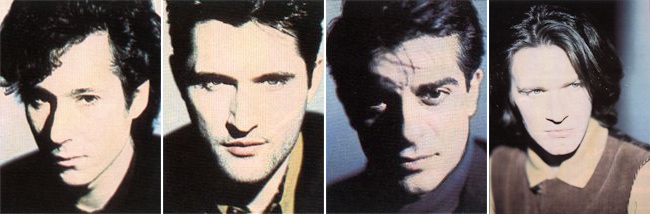
Rain Tree Crow (Sound On Sound, June 1991)
Musicians
- David Sylvian – Hammond organ, guitar, shortwave radio, piano, vocals, percussion, bass, synthesizer
- Mick Karn – bass, saxophone, brass, pipes, bass clarinet
- Steve Jansen – drums, percussion, Hammond organ, piano, marimba
- Richard Barbieri – synthesizer, piano
With contributions from
- Djene Doumbouya, Dianka Diabate – vocals on Big Wheels In Shanty Town
- Bill Nelson – guitar on Big Wheels In Shanty Town, Blackwater
- The Phantom Horns (Johnny Thirkell, Gary Barnaclae) – trumpet, flugelhorn, saxophone on Big Wheels In Shanty Town
- Phil Palmer – guitar on Big Wheels In Shanty Town, Red Earth (As Summertime Ends)
- Michael Brook – bass conga on Red Earth (As Summertime Ends), guitar on Pocket Full Of Change, percussion on A Reassuringly Dull Sunday, treatments on Scratchings On The Bible Belt
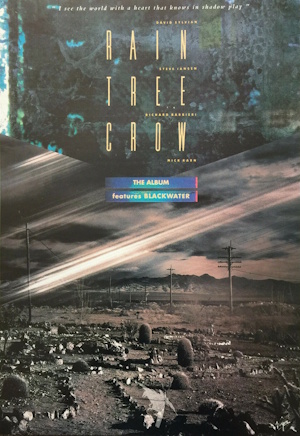
Rain Tree Crow – Rain Tree Crow – Advertisement
After Rain Tree Crow
In the June 1991 issue of Sound On Sound, Rain Tree Crow was described as “the biggest reunification since Germany.” At the time, it was considered impossible that the original Japan members would ever play together again. Yet, remarkably, they did. During the recordings, everything proceeded harmoniously and everyone was pleased with the result. And the initial plans were ambitious.
We believed that it would be a long-term project and that the name Rain Tree Crow would become more important than the name Japan.
Mick Karn, 1996
Soon, rumors began to circulate that the band members could no longer stand the sight of each other. Sylvian mixed the album in such a way that the other members barely recognized the music anymore. The “rawness” had been removed. Sylvian was the scapegoat.
Everything began well. We had so much fun working on the new material and hanging out again. But we took too long over it. We let it drift too long and we began to fall apart even before the album was completed. We had differences of opinion and money was a big problem, which put a lot of pressure on the band. Before then, we had been talking about doing a second and third album and live performances. Then the old tensions and frustrations re-emerged and you could see that there was no point in us taking it any further. In life, relationships run their course – that’s the case with me and Mick – and there’s no point trying to breathe new life into them. My brother and I didn’t speak for about five years after the end of the Rain Tree Crow project. This coincided with my moving to the States. Looking back, I’d say it was a healthy break.
David Sylvian, November 4, 2005
This turned out to be a very positive portrayal of the relationships between the band members. In 1996, Mick Karn offered a glimpse behind the scenes of the recording of the Blackwater video.
The video was a contractual fulfillment. It’s something that we had to do. It was all filmed separately. We didn’t bump into each other once during the making of that video. It was all done separately, on separate days.
Mick Karn, 1996
The interviewer even asks, “Specifically to avoid one another?”, to which Karn responds affirmatively.
In closing
The story of Rain Tree Crow is short and intense. Japan never returned, which was already clear in 1991, soon followed by the realization that Rain Tree Crow would never return either.
What do you think of Rain Tree Crow? Let us know!

Video/Spotify
This story contains an accompanying video. Click on the following link to see it: Video: Rain Tree Crow, Japan part II?. The A Pop Life playlist on Spotify has been updated as well.

