
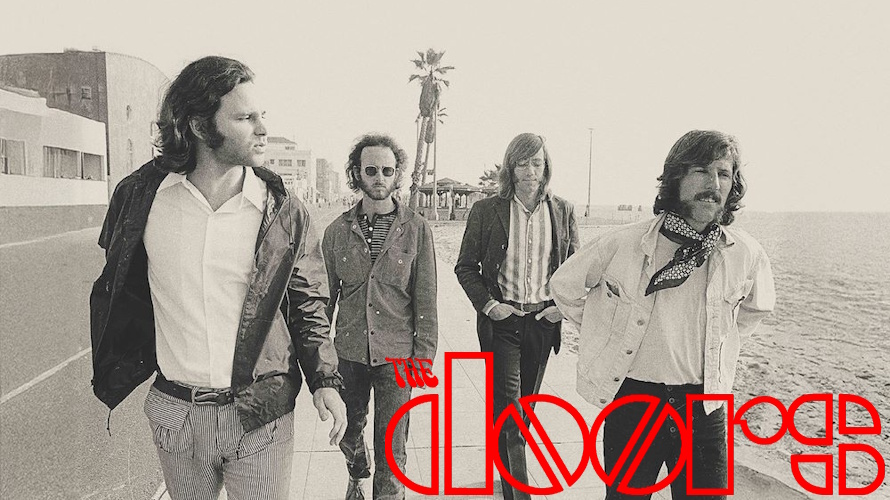
The Doors (left to right: Jim Morrison, Robby Krieger, Ray Manzarek, John Densmore)
Introduction
On April 19, 1971, the final Doors album featuring singer Jim Morrison was released. L.A. Woman, together with the debut album The Doors, is generally considered the best the band ever recorded. A perfect reason for a ‘best of’ The Doors.
The Doors have not appeared on this blog before. There are bands I find difficult to write about, such as The Beatles, Jimi Hendrix, Sam Cooke and Stevie Wonder. The Doors fall into that category as well. The reason is not always clear to me, but it is unjustified that they are not or insufficiently covered. In the five years that Jim Morrison was the band’s lead singer, the group released six classic albums. Jazz, rock, poetry, theater, blues, and beautiful songs were the result.
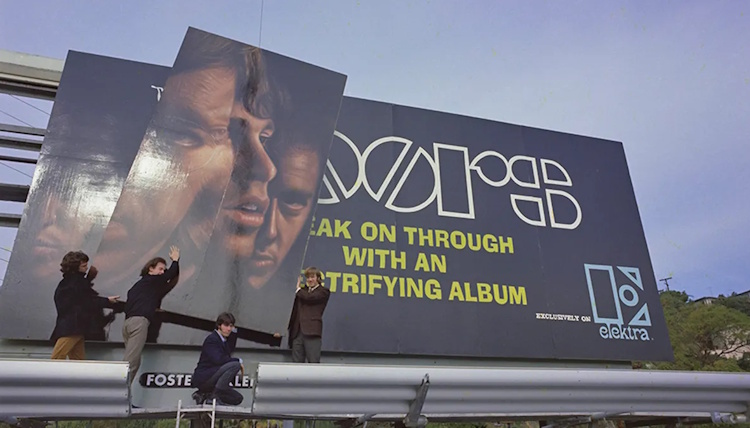
The Doors putting up the billboard for their debut album 1967
The Doors
The band was surrounded by chaos, rebellion, problems with police and the justice system, but also extreme adoration and fandom. The focal point was Jim Morrison, an enfant terrible, singer and poet, who met Ray Manzarek in July 1965 and thus laid the foundation for The Doors. The name was based on the book The Doors of Perception by English writer and philosopher Aldous Huxley, which in turn was inspired by a line from William Blake’s The Marriage of Heaven and Hell. By the end of 1965, the definitive line-up of The Doors was complete: Jim Morrison (vocals), Ray Manzarek (keyboards), John Densmore (drums), and Robby Krieger (guitar). In August 1966, the debut album The Doors was recorded and released in early 1967. It is one of the greatest debut albums of all time. The first single, Break On Through, didn’t do much, but Light My Fire, the second single, reached the top of the U.S. charts in May 1967. Later that same year, album number two, Strange Days, was released.
The Doors became big news in the U.S. almost overnight. In Europe, it took a bit longer. During their first tour on the European mainland, Morrison collapsed during the opening act and was unable to perform in Amsterdam in September 1968. The Doors played the concert without him, with vocals taken over by Manzarek. Despite incidents like this, The Doors grew bigger and bigger in Europe. However, Morrison’s problems with alcohol and drugs also escalated. In 1969, he announced he wanted to leave The Doors, but was persuaded by Manzarek to stay another six months. Recording albums became more exhausting, longer, and more difficult (The Soft Parade 1969, Morrison Hotel 1970). Morrison’s attitude led to enormous expenses and debts. The Doors were close to calling it quits. Meanwhile, the albums remained successful and the singles became hits.
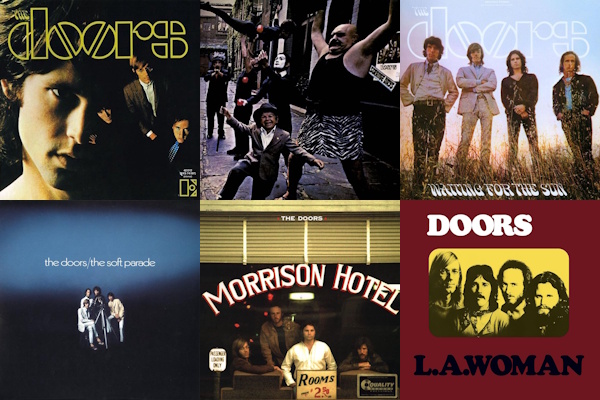
The Doors – All albums (with Jim Morrison)
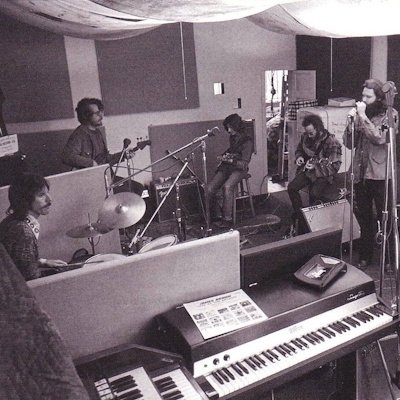
Problems with police and the justice system made it increasingly difficult for The Doors to find venues to perform. Many venue owners were reluctant to take the risk. Late 1970, the band settled at the Sunset Sound studio in Los Angeles with renewed hope and energy, where the recordings for the L.A. Woman album took place. On March 11, 1971, when the L.A. Woman album was mixed, Jim Morrison left for Paris with his girlfriend Pamela Courson. A month later, on April 19, 1971, L.A. Woman was released and enthusiastically received by press and public. It would become the best-selling Doors album, after the debut. On July 3, 1971, Jim Morrison, aged 27, was found lifeless in the bathtub of his home in Paris.
During Morrison’s stay in Paris, the rest of the band had begun recording the follow-up album Other Voices, with Manzarek and Krieger taking over vocals. In August 1972, the final Doors album, Full Circle, was released. In 1973, the remaining members disbanded The Doors.
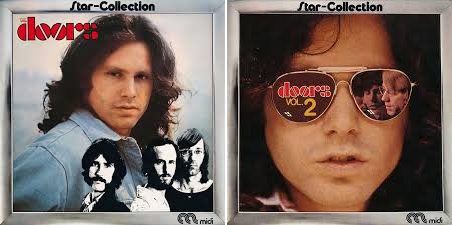
The Doors – Star Collection vol. 1 & 2
Personal connection with The Doors
In my early youth, I only knew The Doors by name. My father, not a fan, only owned the last album, Full Circle, as far as I can remember. I must have heard songs like Light My Fire, but I don’t remember how or when. My personal interest was sparked when I read that British DJ John Peel played The End on the radio when he heard that Joy Division‘s Ian Curtis had committed suicide.
In part because of that, I bought both Star Collection volumes in July 1983. They were on sale at the Free Record Shop in Alkmaar. I still clearly remember it was a warm sunny day. I played both albums regularly and was truly impressed by The End and especially The Soft Parade (still one of my favorite Doors songs).
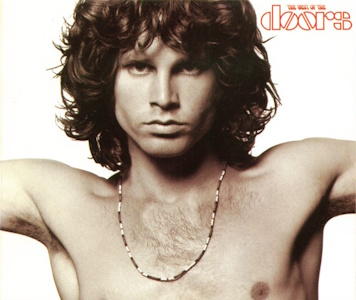
The Doors – The Best Of The Doors
In the CD era, the excellent compilation The Best Of The Doors was the go-to introduction to The Doors. I played that album endlessly. Read the liner notes of that album in the sub-article The Doors – The Very Best Of The Doors – Liner notes. Only much later did I buy the individual albums. In 1991 the film The Doors was released by director Oliver Stone. The film portrayed an exaggerated image of Morrison. Ray Manzarek: “It was ridiculous … It was not about Jim Morrison. It was about Jimbo Morrison, the drunk. God, where was the sensitive poet and the funny guy?”.
Personally, I have always had a love-hate relationship with Jim Morrison. My impression was (and is) that he was a very annoying person who came to believe his own myth. However, Jim Morrison also was a gifted lyricist, singer, and frontman. His performances were impressive, theatrical, exciting, and innovative. But his delivery and singing would never have developed without the musicians behind him. The music of The Doors was completely unique. There is no band in the world that sounds or has sounded like The Doors.
Top 25
The Doors built an impressive body of work. Below are my 25 most essential songs. Due to criticism of various compilations, which lack continuity, the songs are sorted by release date and their order on the corresponding album. The album and release year are listed in parentheses below the titles.
And yes, it is not a mistake: songs like Soul Kitchen, Alabama Song (The Whisky Bar), Moonlight Drive, and Spanish Caravan are missing. Not bad songs, but in my opinion not worthy of my top 25.
For listening convenience, the (Spotify) playlist of the top 25 is included at the bottom of this article.
|
|
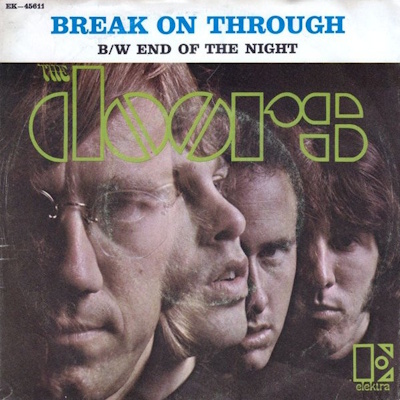
Break On Through (To The Other Side)(The Doors, 1967) The opening track of the debut album and the first single by The Doors. Musically, it is a combination of bossa nova and rock. Lyrically, it likely refers to drug use, after which the user leaves reality (“to the other side”) and sees the world more clearly (more truthful). You know the day destroys the night |
|
|
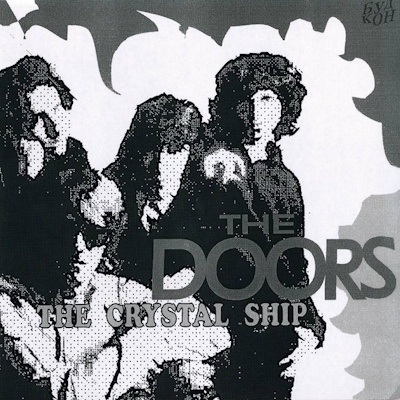
The Crystal Ship(The Doors, 1967) A beautiful, baroque-style song that serves as an ode to Morrison’s first serious girlfriend, shortly after their relationship ended. Morrison sings with great emotion, moving the listener with his voice and lyrics. One of the most beautiful Doors songs. Before you slip into unconsciousness |
|
|
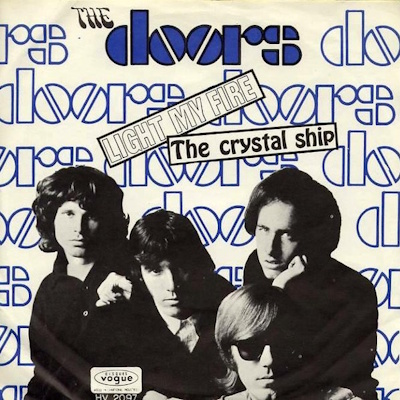
Light My Fire(The Doors, 1967) Classical music, blues, jazz, and extended keyboard and guitar solos. A remarkable choice for a single, but a bullseye. It became The Doors’ first number-one hit. In September 1967, The Doors appeared on the popular television program The Ed Sullivan Show. Sullivan demanded that Morrison change the line “Girl we couldn’t get much higher” to “Girl we couldn’t get much better” to avoid any possible reference to drugs. Morrison (of course) sang “higher” on national television. Sullivan was furious and vowed never to have the band perform on his show again. You know that it would be untrue |
|
|
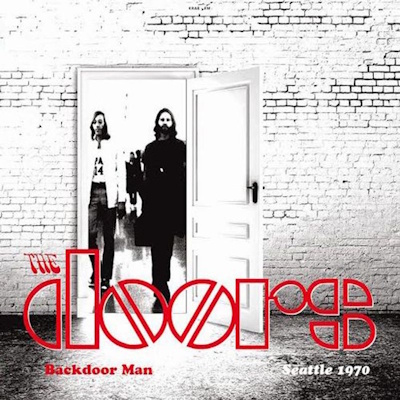
Back Door Man(The Doors, 1967) A cover of a Muddy Waters song. The “back door man” refers to a man having an affair with a married woman who must leave through the “back door” before her husband returns home. Bluesy, erotic, a top performance! Hey, all you people that tryin’ to sleep |
|
|
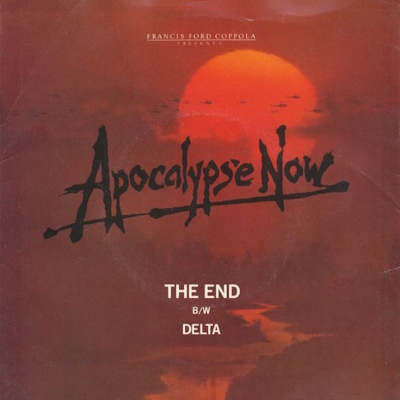
The End(The Doors, 1967) One of the songs The Doors became known for. Originally started as a farewell to a lover, but over time the track was further expanded. In the spoken section halfway through the nearly 12-minute song, an Oedipus complex scenario is performed: “Father / Yes son? / I want to kill you / Mother, I want to …”, which Morrison sometimes actually finished live with “fuck you”. Deep in the mix, Morrison can be heard saying the word “fuck” several times, a shocking and provocative (and at the time punishable) utterance. The End is a work of art of unparalleled class, beauty, excitement (still), and innovation. Contains the well-known Morrison line “Weird scenes inside the gold mine”. This is the end |
|
|
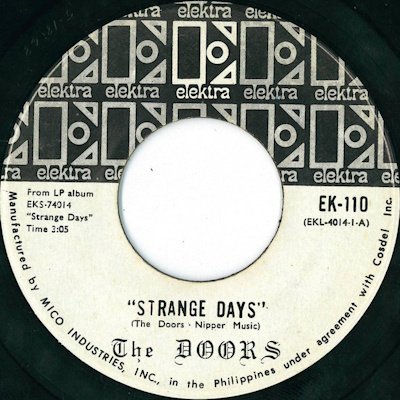
Strange Days(Strange Days, 1967) One of the first songs to feature the Moog synthesizer. Dark, mysterious, and alienating, the track is the perfect introduction to the album of the same name. Strange days have found us |
|
|
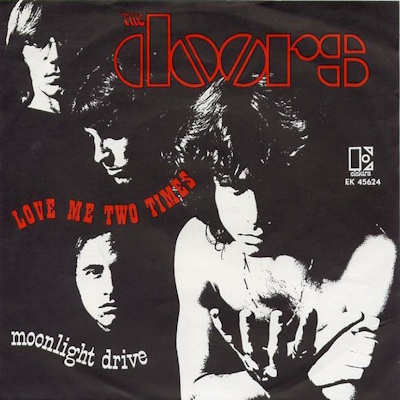
Love Me Two Times(Strange Days, 1967) Released as a single. Notable because “love me two times” essentially means that the protagonist wants to be intimate with his lover twice before leaving. The protagonist is inspired by the start of a Doors tour and a soldier departing for Vietnam. Both situations signify a period of being away from home. Love me two times, girl |
|
|
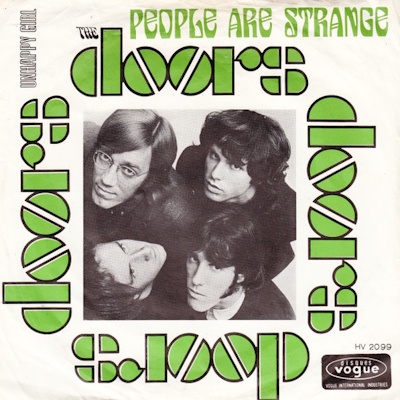
People Are Strange(Strange Days, 1967) The first single from the album, which deals with alienation and, according to reports, was written by Morrison while he was in a depressive mood. People are strange when you’re a stranger |
|
|
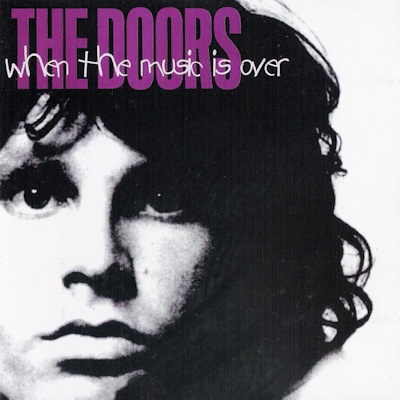
When The Music’s Over(Strange Days, 1967) Another long track, this time 11 minutes. According to biographer Stephen Davis, the song can be divided into five sections: “Turn Out the Lights/Dance on Fire”, “Cancel My Subscription”, “What Have They Done to the Earth?”, “Persian Night” and “Return to the Main Themes”. Does the lyric “Cancel my subscription to the Resurrection / Send my credentials to the House of Detention / I got some friends inside” address heaven and hell? Does Morrison prefer hell? Is this influenced by Nietzsche, whose work Morrison read extensively? The line “what have they done to the earth?” is one of the earliest examples of environmental themes in rock music. The face in the mirror won’t stop |
|
|
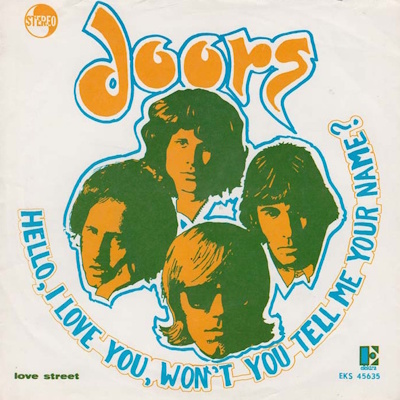
Hello, I Love You(Waiting For The Sun, 1968) According to the band itself, nothing special. In 1968 Morrison said, “Sure, ‘Hello, I Love You’ isn’t one of our best songs, but I am not ashamed of it.” I think it’s a fun song, with a humorous lyric. Musically related to The Kinks’ All Day And All Of The Night, as Manzarek admitted in 2013. Hello, I love you |
|
|
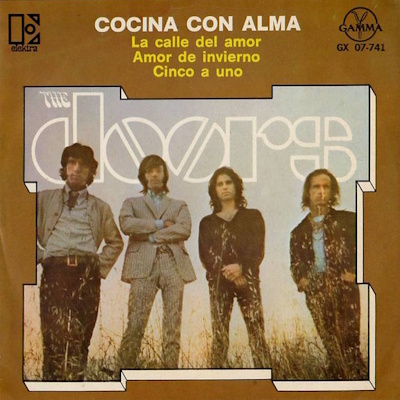
Love Street(Waiting For The Sun, 1968) Dedicated to Morrison’s girlfriend Pamela Courson, a ballad with a relaxed feel. It gives me a strong Our House vibe. Domesticity in its finest form. The closing “La la la…” coda is atypical for The Doors, but perhaps that’s what makes it so effective. She lives on Love Street |
|
|
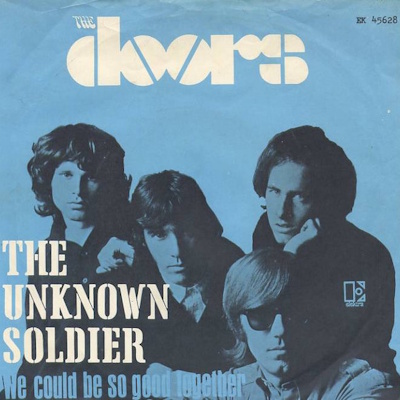
The Unknown Soldier(Waiting For The Sun, 1968) An impressive anti-war song. Reportedly, Morrison was lyrically inspired after visiting the “Tomb of the Unknown Soldier” at Arlington National Cemetery on November 25, 1967. Anti-war sentiments were strong at the time, as the Vietnam War became increasingly present in American living rooms. Opposition to the war was growing. The lyric “And it’s all over / The war is over” is hopeful, but not very realistic. Breakfast where the news is read |
|
|
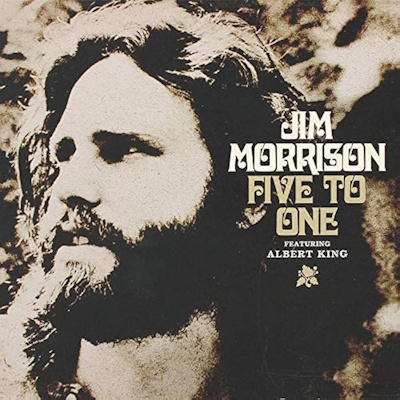
Five To One(Waiting For The Sun, 1968) Rousing music, with Morrison reciting/speaking/shouting. During a 1969 performance of this song in Miami, Morrison insulted the audience, calling them “idiots” and “slaves”. After the concert, Morrison was arrested for “attempting to incite a riot.” He was subsequently convicted for indecent exposure. Five to one, baby |
|
|
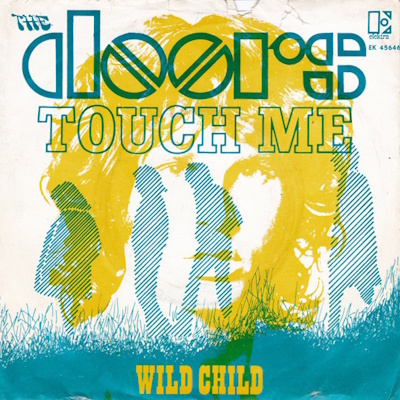
Touch Me(The Soft Parade, 1969) The Doors’ last Top 10 hit in the U.S. A rock-pop song with jazzy brass arrangements. Now, I’m going to love you |
|
|
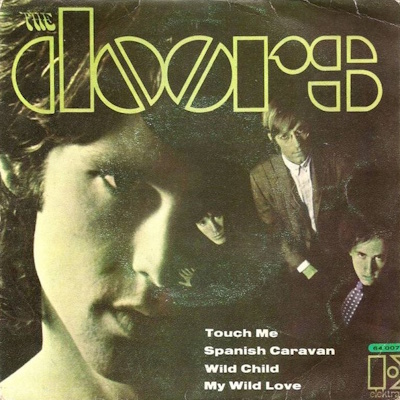
Wild Child(The Soft Parade, 1969) Psychedelic and bluesy, Wild Child is a more direct track than the rest of the album. Probably written about Pamela Courson. According to some sources, Courson herself wrote the lines “With hunger at her heels / Freedom in her eyes / She dances on her knees / Pirate prince at her side / Staring into the hollow idol’s eye”. Natural child, terrible child |
|
|
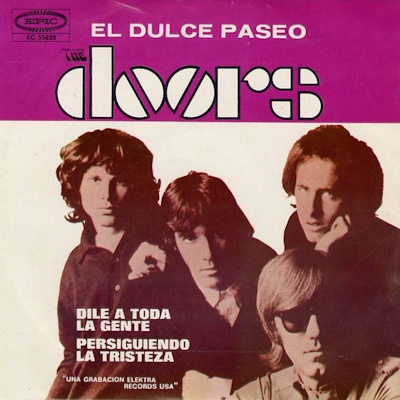
The Soft Parade(The Soft Parade, 1969) One of my favorite songs by The Doors. The track contains five or six different musical themes, making it the most versatile song by the band. When the final (and longest) theme arrives, Morrison himself was very satisfied with where the song had reached: “This is the best part of the trip / This is the trip, the best part / I really like”. The Soft Parade has now begun |
|
|
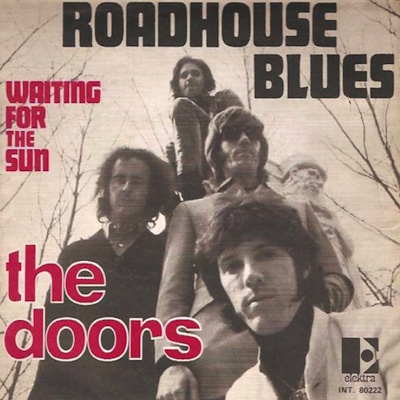
Roadhouse Blues(Morrison Hotel, 1970) Considered by engineer Bruce Botnick as “the all-time American bar band song”. It is unclear how the song exactly came about, but it quickly became a staple of the live set. The title was considered as an album name but was ultimately replaced. Oh, keep your eyes on the road, your hands upon the wheel |
|
|
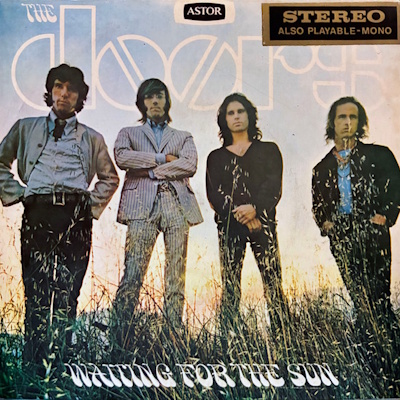
Waiting For The Sun(Morrison Hotel, 1970) Originating from 1970, and therefore not from the eponymous 1968 album. However, it was reportedly written during sessions for that album. The track sounds more psychedelic than the blues-oriented material the band focused on in 1970. Can’t you feel it |
|
|
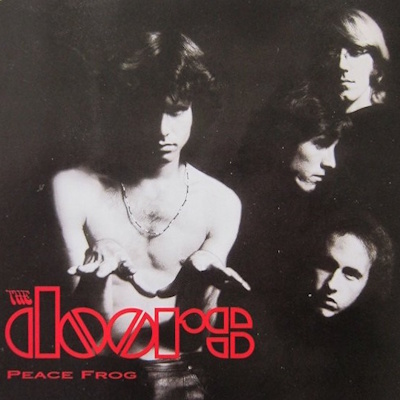
Peace Frog(Morrison Hotel, 1970) Morrison used three poems as lyrics for the already recorded (funky) music. One of them was titled “Abortion Stories”, which was the proposed song title, but due to its controversial nature, was changed to Peace Frog. The lyric “Blood in the streets in the town of New Haven” refers to his arrest on stage on December 9, 1967, at the New Haven Arena. “Blood in the streets in the town of Chicago” refers to protests during the 1968 Democratic Convention. “Indians scattered on dawn’s highway bleeding” describes an accident Morrison saw when he was young. Although Morrison cited that incident as one of the most formative events of his life, it is questionable whether it actually happened. There was an accident in 1947, but no Native Americans were involved; however, a passenger did die on the scene. There’s blood in the streets |
|
|
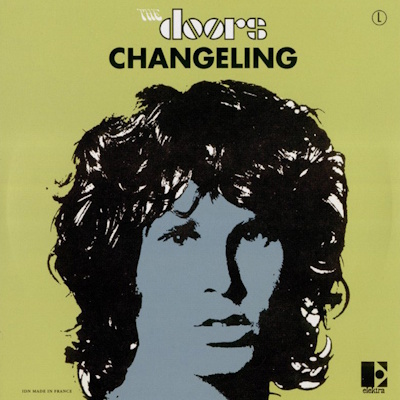
The Changeling(L.A. Woman, 1971) Robby Krieger called the song “our ‘James Brown’ thing”. During the recording, Morrison said, “I hate to spook anybody, but this is my favorite number. Play your ass off, boy.” The funky intro gradually transforms into garage rock. Morrison sings the song with the right conviction and soul. I had money, and I had none |
|
|
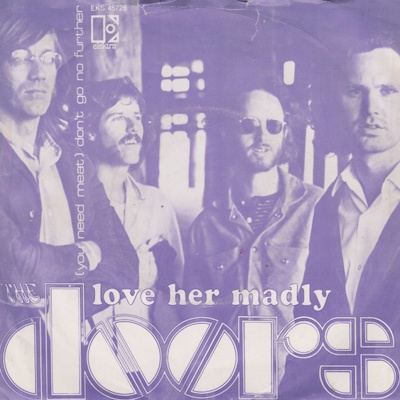
Love Her Madly(L.A. Woman, 1971) Written by Robby Krieger about his tumultuous relationship with his wife. Released as a single and a major hit in 1971. Don’t you love her madly? |
|
|
Cars Hiss By My Window(L.A. Woman, 1971) Ray Manzarek: “Jim said it was about living in Venice, in a hot room, with a hot girlfriend, and an open window, and a bad time. It could have been about Pamela Courson”. A languid, lazy blues. The cars hiss by my window |
|
|
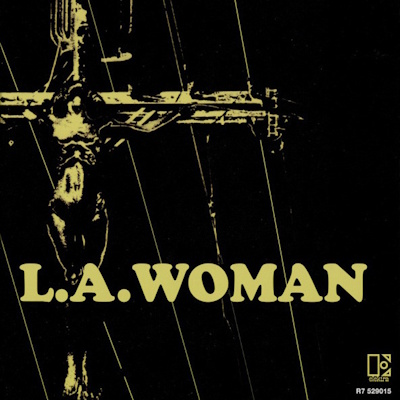
L.A. Woman(L.A. Woman, 1971) A farewell to Los Angeles, just before Morrison’s departure to Paris? The phrase “Mr. Mojo Risin'” is an anagram of the name Jim Morrison. Well, I just got into town about an hour ago |
|
|
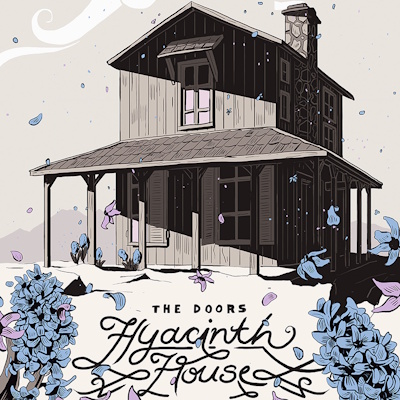
Hyacinth House(L.A. Woman, 1971) Written by Manzarek (music) and Morrison (lyrics). An ‘ode’ to Morrison’s deteriorating emotional state? Does Morrison use the ancient Greek myth of the origin of the hyacinth to describe his own sense of unhappiness? What are they doing in the Hyacinth House? |
|
|
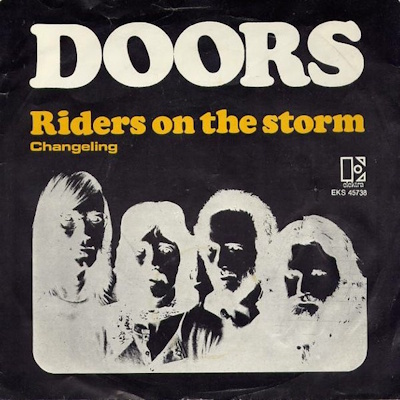
Riders On The Storm(L.A. Woman, 1971) The last song Jim Morrison worked on before his death. The single was released in June 1971. Manzarek: “There’s a whisper voice on ‘Riders on the Storm,’ if you listen closely, a whispered overdub that Jim adds beneath his vocal. That’s the last thing he ever did. An ephemeral, whispered overdub.” Riders on the storm |
In closing
What do you think of The Doors? Are there any songs you feel are missing, and if so, which ones? Let me know!

Video/Spotify
This story contains an accompanying video. Click on the following link to see it: Video: The 25 best Doors songs. The A Pop Life playlist on Spotify has been updated as well.

